Internal complaints as a source of legal risk
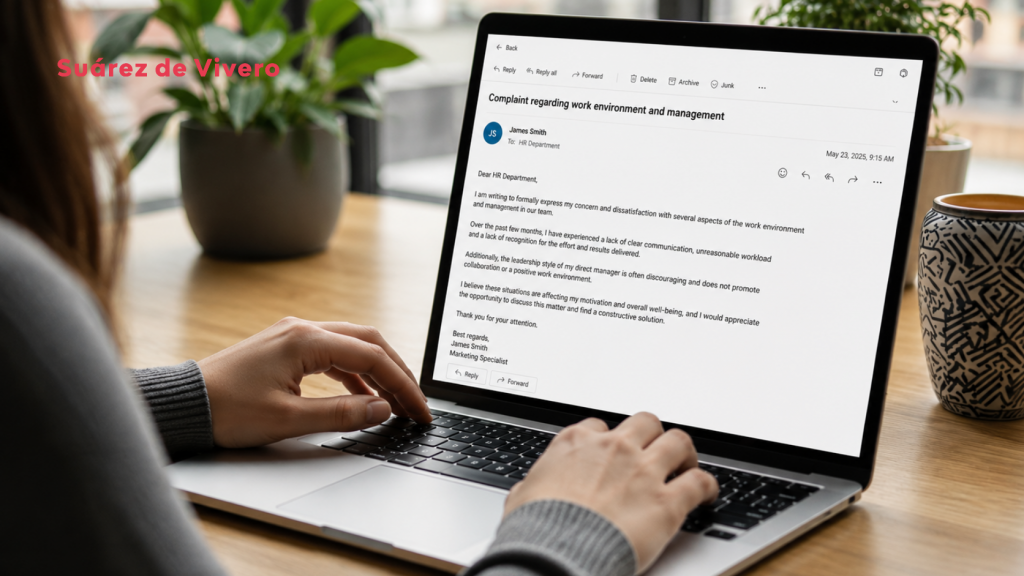
Complaints from employees form part of the ordinary management of any company. Not all of them have legal relevance, and not all require the same response. However, when a complaint contains a specific claim relating to employment rights, salary, working time, overtime, professional classification, working conditions or treatment received, the company must handle it with particular care.
The reason is clear: an unfavourable measure adopted shortly after such a claim may be interpreted as retaliation. In that scenario, the legal protection against retaliation comes into play, safeguarding the employee from negative consequences arising from the exercise of their rights.
For the company, the risk does not lie in receiving a complaint. The risk lies in managing it in a disorganised manner, responding reactively or adopting a disciplinary decision without a sufficiently solid documentary basis.
What has changed in practice
Protection against retaliation was traditionally associated with judicial claims. That view has gradually expanded. Today, certain internal claims or preparatory actions may also trigger protection when they are aimed at requiring compliance with employment rights.
Organic Law 5/2024, of 11 November, on the Right of Defence, expressly recognises employees’ right to protection against retaliation in relation to unfavourable consequences arising from actions carried out before the company, the Administration or the courts to claim their employment rights.
This requires companies to review how they receive, document and respond to internal complaints. It is not a matter of overreacting to every communication, but of correctly distinguishing between an operational complaint and a legally sensitive claim.
A recent judgment of the High Court of Justice of Asturias
Judgment 228/2026 of the High Court of Justice of Asturias, dated 17 February 2026, appeal no. 1752/2025, confirms this line of analysis.
In the case examined, the employee claimed payment of overtime through internal communications by email and WhatsApp. Subsequently, he requested a change in his professional classification. Four days after the last claim, the company notified him of the opening of disciplinary proceedings, which ultimately led to his dismissal.
The court upheld the nullity of the dismissal. The key issue was not only the existence of prior claims, but the combination of three factors: the employment-related content of the complaints, the temporal proximity between the last claim and the disciplinary proceedings, and the absence of a sufficiently proven and independent business justification.
The judgment also recalls that internal claims may be protected by the legal protection against retaliation when they seek to ensure respect for employment rights.
What the company should do when it receives a complaint
The first step is to identify the nature of the communication. An organisational disagreement is not the same as a claim concerning employment rights. If the employee claims amounts owed, reports excessive working time, requests recognition of a professional classification or questions specific working conditions, the company should treat the communication as a legally sensitive matter.
From there, the information should be properly organised: date of receipt, channel used, recipients, exact content, background and response given. This documentation may be decisive if a disciplinary measure or unfavourable organisational decision is adopted later.
It is also important to avoid informal or defensive responses. A rushed WhatsApp reply, a poorly worded email or an inadequately documented internal reaction may weaken the company’s position in subsequent proceedings.
If a subsequent disciplinary measure is adopted
The company may sanction or dismiss an employee who has previously submitted a complaint, provided that there are real and sufficient reasons unrelated to that claim. However, in these cases, the burden of proof becomes more demanding.
Before initiating disciplinary proceedings or notifying a dismissal, three issues should be reviewed. First, whether the sanctionable facts had been identified before the complaint. Second, whether there is sufficient and consistent evidence. Third, whether the measure is proportionate and consistent with the company’s previous practice.
The dismissal or disciplinary letter must be precise. Generic references to loss of trust, disobedience or breach of contractual good faith are not enough. The company must be able to explain what happened, when it happened, how it was proven and why the measure adopted is appropriate.
A disciplinary decision must not only be legally correct. It must also be defensible in practice.
Criteria for reducing risk
Proper management of these situations requires method. The company should retain the original complaint, classify its content, review whether there is any prior background, document any internal investigation and clearly separate the claim from any subsequent disciplinary decision.
The chronology must be analysed with particular care. The closer the company’s measure is to the complaint, the greater the need to prove that the decision is based on an independent cause.
It is also advisable to assess the proportionality of the action taken. Even where there are real breaches, the company should ask itself how the measure will be interpreted if examined alongside the prior claim.
This analysis is not intended to limit the company’s management powers. On the contrary, it allows those powers to be exercised with greater legal certainty.
Frequently asked questions
Does any internal complaint trigger protection against retaliation?
No. Protection is linked to claims concerning employment rights or actions aimed at defending those rights. A generic complaint or an operational disagreement does not necessarily have that effect.
Can an employee who has claimed overtime be dismissed?
Yes, provided that there are real and sufficiently proven reasons. The critical point will be to demonstrate that the dismissal is unrelated to the claim and is based on objective facts.
Why is temporal proximity so important?
Because an unfavourable measure adopted only a few days after a claim may create an indication of retaliation. In that case, the company must justify the reason for its decision with particularly robust evidence.
Can emails or WhatsApp messages be used as evidence?
Yes. If they contain a specific employment-related claim, they may be relevant when assessing whether there was an action protected by the legal protection against retaliation.
Employment law advice on sensitive disciplinary decisions
Internal complaints must be managed with legal judgment and a business perspective. A rushed response may turn a disciplinary decision into a fundamental rights dispute.
At Suárez de Vivero, we have a team specialised in Employment Law that advises companies on the proper management of dismissals, disciplinary proceedings and the prevention of legal risks.
Contact our team to receive specialised advice and reinforce the legal certainty of your employment decisions.